Did you make the list? Here are the top 10 most-viewed interviews on VatorNews in 2011.
Brian Wong explains how Kiip will make money
 In a continuation of my interview with Brian Wong, Wong explains that the key to Kiip’s business model is how it will leverage the uniquely addictive quality of mobile gaming to keep people hooked and interacting with ads.
In 2010, the company raised $300K to help with product development and scaling, and while Wong wouldn’t say whether the company plans to raise additional funds this year, he did note that, “With the funding environment right now, it would be a mistake not to figure out what options there are.”
When we discussed ideal companies to partner with, Wong explained that there are already a number of companies in the game developing world that serve both publishing needs and in-game development. Ideally, said Wong, Kiip would partner with an in-game developer that already has the power to command a large audience, as well as the publishers themselves. “Those two bodies are very important for us to work with,” he said. Read more
How does Q&A service ChaCha make money?
 Q&A sites are getting a lot of attention in the past year. Last week, Formspring raised $11.5 million from Benchmark. In December, Twitter bought Q&A site Fluther. Last October, ChaCha raised $20 million, bringing total funds to date to nearly $72 million. Last spring, Quora raised $11 million for a reported $86 million. And, at the start of last year, Google bought Aardvark. Other startups are emerging in this space, like Law Pivot, a Q&A site just for legal advice, which launched last August. Meanwhile, other lesser-known, non-VC-backed startups, such as JustAnswer, are making solid revenue by allowing experts to charge for providing answers.
In this interview, I talked to ChaCha CEO and co-founder Scott Jones, how his company is making money. Read more
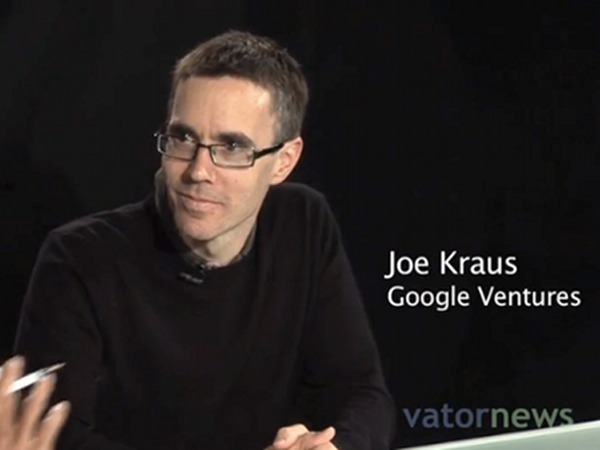
Google Ventures plans on 80 seed deals a year
 Google Ventures has been one of the more active Silicon Valley investment firms, having made some 50 investments since 2009. It also has a pretty good exit under its belt with ngmoco, a gaming startup that sold for $400 million at the end of 2010, months after Google Ventures invested. More recently, the VC led an $85 million investment in Kabam, a gaming company focused on hardcore gamers. Joe Kraus, who joined Google Ventures as a partner in 2010, went on the board of Kabam as well.
Recently, I sat down with Joe, whose better known for his experience on the other side of the investment table. Joe founded Excite, one of the first search engines, which also became one of the first Internet companies to go public in 1996. Joe went onto find JotSpot, which he sold to Google in 2006. After Joe’s earnout was finished at Google, he decided that it was time to try his hand as an investor. Read more

 In the old days, I used to organize my address book. But when search in email came along (years ago), I didn’t bother since I could easily just search for someone’s name in my inbox, and find their information. Now, I’m doing the same thing with more than just addresses.
 The other day, I received Square’s pocket-sized credit card reader that attaches to my iPhone. The slick gadget is one of the newer, and more sophisticated and elegant innovations I’ve seen around commerce in the past 15 years that I’ve been covering Internet trends.
  Many startups go through a phase that tests the mettle of a founding team. I see it all the time as someone who runs a community for entrepreneurs. They raise a decent amount of initial funds, and see a little bit of early success or media attention. Then they fail to really take off for inumerable reasons. That doesn’t mean, however, they’re not worth investing in any longer. Often gems are found in this group. If only they had another round of funding that’s not too small ($1 million), not too large ($5 million), but just enough – about $2 million.
 I recently caught up with Kevin Ryan, CEO and founder of Gilt Groupe, one of the fastest growing startups, as measured by revenue. Gilt Groupe, founded at the end of 2007, generated $500 million in revenue in its fiscal year that just ended in July. And, its full-priced businesses, now offered in its travel (Jetsetter), gourmet food (
 Danny Shader’s newest project, PayNearMe, has an ambitious demographic: the quarter of the U.S. population without bank accounts or credit cards. His new cash-payment solution allows users to make remote transactions (for an Amazon purchase or Facebook credits, for example) by starting the transaction online and then taking a printed receipt to a nearby 7-11 to complete the exchange by paying in cash. The 7-11 cashier essentially acts as an ATM-like point-of-connection between the consumer and the business, and the whole exchange is handled in cash. Approximately
  Airbnb is quickly becoming “the” startup darling to watch, thanks to recent
Kristin Karaoglu
Woman of many skills: Database System Engineer; SplashX event producer; Author of Startup Teams All Author PostsSupport VatorNews by Donating
Read more from related categories



Related News
-

Kevin Ryan on Gilt Groupe’s hockey-stick growth
-
How e-commerce evolved from search to feeds
-
Google Ventures plans on 80 seed deals a year
-
Airbnb growing 30% to 50% monthly
-
Evernote driving $1 million a month in sales
-
Danny Shader outlines PayNearMe’s demographic
-
Brian Wong explains how Kiip will make money
-
How does Q&A service ChaCha make money?
-
How does Lithium make money with social CRM?
-
Bullpen Capital launches fund to bridge deals