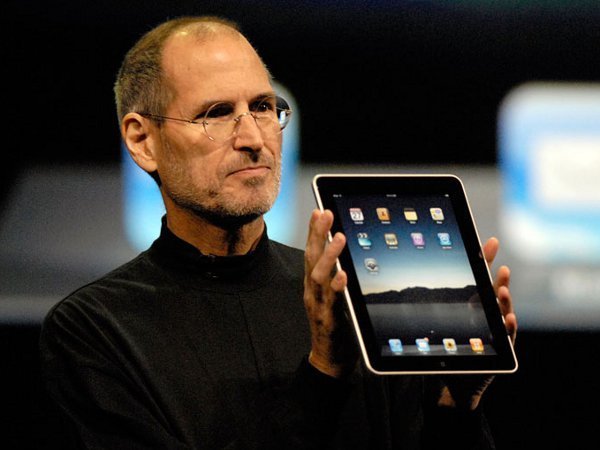

As the world waits in breathless wonder for the official unveiling of the iPad 2 this morning at 10 am PT, an ugly reality rears its head once more: price. The iPad has remained elusive for many in middle-class America due to its high price range, but this isn’t all that surprising given Apple’s reputation for higher-priced devices. What is surprising is the fact that no one else has come out with a cheaper tablet. Android has skyrocketed to the top of the OS market by undercutting Apple’s retail prices, so why haven’t Apple’s competitors done the same with a tablet?
Toni Sacconaghi, senior analyst at Bernstein Research, points out in a report released Wednesday morning that when the tablet economics are broken down, the iPad’s gross margins are only around 25%, and with Apple’s 750 to 975 base point cost advantage, that makes it next to impossible for competitors to offer cheaper prices. In other words, the iPad is already being offered at the lowest price possible.
Indeed, a quick glance at competitor prices makes it clear that not only are they unable to undercut the iPad price, most are actually more expensive. The full retail price of the Motorola Xoom is a hefty $800 ($500 with a two-year contract), as is the HP Slate. Verizon is offering the Samsung Galaxy Tab with a full retail price of $500, but is willing to shave off $200 with a two-year contract.
So why no cheap tablets? Sacconaghi identifies a couple of key points here. First of all, in the smartphone market, Apple created a pricing umbrella on iPhones given its 50-60% gross margins, which left a pretty substantial window for Android to shimmy through to undercut Apple. But this is clearly not the case for the iPad.
Secondly, Apple’s large cash storage has allowed it to pre-purchase components, which Sacconaghi and his team believe gives Apple a unique pricing advantage. It also helps that Apple drives some 20% or more of the global NAND flash volume, which likely gives the company an ideal pricing edge on NAND flash.
And then there’s the cost of distribution. Some 33% of all iPads are sold through Apple’s own retail stores and online, it pays no commission fees to a channel partner.
Toshiba released its Folio 100 tablet on the UK market in 2010, which was €100 less than the comparable iPad–a pretty amazing feat, right? Apparently not–since the lower price translated to lower quality. The tablet was pulled in November 2010 due to high return rates. Apparently, the tablet was slow, had an unresponsive screen, and was just generally poorly made.
Image source: Inc.com