Digital adoption platform WalkMe has gone through a number of iterations since being founded in 2012. When it raised funding $11 million in 2014, its mission was to help people navigate the Internet by allowing companies to create walkthroughs of their websites for visitors and employees. A couple of years later, when the company raised a $50 million round, it was about assistance, going beyond navigation to help the user do more on the site.
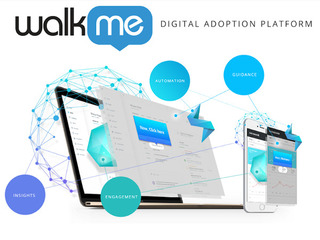
In its current iteration, WalkMe helps simplify the user experience on B2B applications through insights, engagement and guidance capabilities through machine learning and artificial intelligence. Essentially, what it does is it reverses the way that people interact with software, making it so that the applications better understand the user, rather than the other way around, in order to make the experience as efficient as possible.
To make money, the company deploys a SaaS model, offering a subscription-based software licenses to its customers.
“We offer various pricing packages based on the number of users and the needs of the customer. The pricing model is per user, per month. WalkMe is selling to multiple verticals and industries, as well as all sizes of companies, including 30 percent of the Fortune 500,” Rephael Sweary, co-founder and president of WalkMe, told me.
On its website, WalkMe outlines the two plans it offers. First is its Basic Plan, which includes three walk-thrus, up to five steps per walk-thru, 300 assists per month and basic online support. The other option is its Custom Plan, which comes with unlimited walk-thrus, unlimited steps per walk-thru, unlimited assists, multiple support options, multiple domains, full help desk integration, design flexibility and analytics, among other things.
While no prices are listed, WalkMe can cost anywhere between “a few cents to a few dollars per user per month, depending on the use case,” Sweary said. “The cost for an external user such as a customer, who uses WalkMe seldom, is significantly lower than the cost for an internal user, who uses WalkMe a few times a day, such as an employee.”
A SaaS model works best for WalkMe, he told me, “Because it aligns the value with the pricing and guarantees high ROI on any project.
“It also ties the customer project success to WalkMe interests. If the customer is not happy he will stop the subscription,” said Sweary. “I think the strong focus to make sure the customer is always happy, because it is a subscription and not an asset sale) makes us a better organization, with a better product, better service and overall stronger commitment for customer success which ultimately leads to a stronger success for the company.”
WalkMe has raised $217.5 million in venture funding, most recently a $50 million Series F round from EDBI, Insight Venture Partners and Mangrove Capital Partners. Other investors include Scale Venture Partners, Giza Venture Capital and Gemini Israel Ventures.

Steven Loeb
All Author PostsSupport VatorNews by Donating
Read more from related categories



Related News
-

WalkMe extends its Series F round to go deeper into the Asia Pacific market
-
Today’s Entrepreneur: Rephael Sweary
-
Digital adoption platform WalkMe raises $40 million
-
WalkMe acquires machine learning company DeepUI
-
Online assistance platform WalkMe raises $50M Series E
-
Internet navigaton tool WalkMe raises $25M
-
WalkMe raises $11M to help you nagivate the Internet
-
WalkMe raises $5.5M to walk you through Web pages
-
WalkMe raises $1M for user guidance system
-
WalkMe walks you through confusing websites