Snapchat has started to catch up, or even surpass, its rivals recently, not only in terms of users but also content. Earlier this year, Snapchat hit 10 billion video views a day, which is more than Facebook. Now it might have a new way to incentivize people to post: give them money.
In a patent filed in 2014, but not disclosed until Thursday, shows that Snapchat has been devising a new way for users to group their photos together, called a “Gallery of Messages from Individuals with a Shared Interest.”
Basically, it would work in a similar way to Snapchat’s current Live Stories feature, in which users, all of whom are attending the same event, can upload photos and videos that are centered around that shared experience. In this case, though, it be around a shared interest.
The user can ask to submit content, or Snapchat might use object recognition to sort the photo into a particular gallery.
“In addition to express user requests to submit content to a gallery, passive requests are also contemplated. For example, the detection of a particular object in a picture or video (detected using, e.g., object recognition processes to detect an object or audio fingerprinting technologies to detect a song, etc.) could be used to prompt a user to join a gallery associated with the object or even automatically post to an existing gallery (e.g., with the user’s consent),” it says.
In one example, a Snapchat user would take a picture of a bottle of Coke. Snapchat would recognize that it’s a bottle of Coke and ask the user if they wanted to participate in a gallery of Coca Cola images. The user would be able to choose whether or not they wanted to participate.
So far this seems like a natural extension of what Snapchat is already doing: taking photos and videos and using them in ways that connect people. Pretty cool, but nothing spectacular.
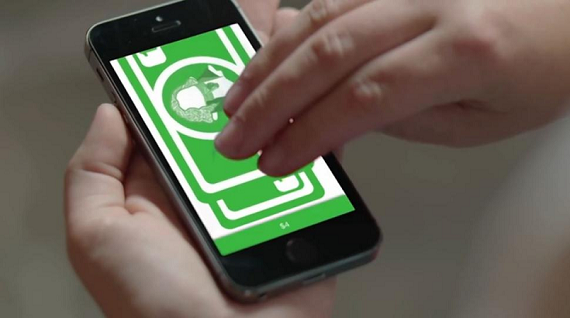
Here’s where it gets really interesting, though. Snapchat also floats the idea of giving money to users for permission to run that content.
“Alternately, machine vision and content rules may be used to automatically curate the gallery. In embodiments that include compensation to be paid to a user, the curation interface may be configured to make automatic payments to the users for the use of their pictures or videos.” (The emphasis is mine)
There is no other mention in the patent regarding the idea of paying users to contribute to galleries. It isn’t clear why Snapchat would start giving out payments for content, or what kind of content it would pay for. If it will be using the images in advertisements, perhaps it would give those users a cut of the revenue.
VatorNews reached out to Snapchat for more information, but company would not comment further.
Getting paid for content online
The idea of users being paid for their work on social media isn’t really new. YouTube has been doing it for a long time, allowing uploaders to either make money via advertising, or from subscribers paying for YouTube Red, it’s ad-free service.
Facebook, too, has floated the idea of paying users to post content, with ideas such as a “tip jar,” where users would give other users money for posting, and revenue sharing, where the user would get a cut of any revenue made by having ads in their posts. So far nothing has come of that, though.
Right now a lot of people post their work to social media for free, but some believe that isn’t a recipe for long-term success, including Homebrew founder Hunter Walk. In an interview with Re/code’s Peter Kafka in April, Walk specifically mentioned that he believed Snapchat should start paying its users for content.
“The most important thing that YouTube has done, that Vine hasn’t done, that Instagram hasn’t done, that Snapchat haven’t done yet, is figure a way, for people who want to create content on their platforms, to make money directly, along with the platform, from that content,” Walk said.
“You have a lot of platforms today that, I think, serve as good distribution; they bring the people to the platform. But, unless they’re willing to make the economic commitment, to figure out how to share the upside of the value of this content directly with the creators, I don’t think they’ll ever reach the levels of success that YouTube has.”
It seems like at least someone at Snapchat agrees with that assessment.
This patent was first uncovered by The LA Times.
(Image source: mensquare.com)