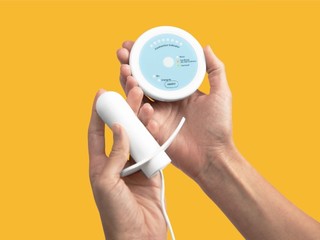
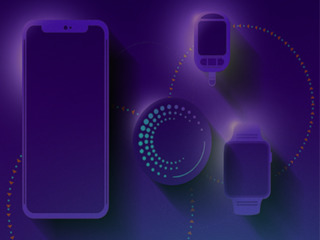
Summary Description: PowerBeam’s patented wireless electricity system uses Powmitters™ and Powceivers™ to deliver power without wires. The optical technology turns electricity into optical power. That power is then beamed across open space into a receiver. Similar to a solar cell, the receiver turns the optical power back into electricity. Whatever device is attached to the receiver is powered without any wires.Such a system could be
applied to any product that requires electricity!
Hey Followers! PowerBeam will have a demo table at VatorSplash! If you want to see us power devices like an iPhone, a Wireless Speaker, Mice and Keyboard with absolutely no wires at all, then be sure to attend VatorSplash!
on January 29
WIRELESS POWER DEMO KITS NOW AVAILABLE! PowerBeam is now taking orders for our 1st batch of long distance wireless electricity demo kits. We have 3 to choose from and you must order before the deadline: 5pm, Jan 22nd. More info and order here: www.powerbeaminc.com/demokit.php
on January 05
Vote Now! We are competing for Elance’s 1 yr of free health care (or $10K) competition and we don’t have any right now so WE NEED YOUR VOTE! Even David’s daughter is in on it and she is the cutest little thing. Check out our video and vote for us here:www.vator.tv/competition
on November 25
PowerBeam is HUGE in Japan. I just finished following-up with the leads David brought back from the Green Device conference. He had over 250 business cards, and they were all top executives at big Consumer Electronic companies. I can't wait to see what comes of this!
on November 05
Problem to be Solved:No matter what you do,
you can not have an outlet in every square or cube foot within a room.With PowerBeam, you can.The main problems with a cord are; expensive
installs, placement limitations, aesthetics, convenience and, most importantly,
the dead battery.
Solution:PowerBeam has the ability to “beam” power to any
device anywhere within line of sight.Meaning, you can place your PowerBeam Floor Lamp anywhere you want in
the room.You can hang a 14 inch Digital
Photo Frame on the wall without the unappealing cord hanging down.You can install Lights without calling an
expensive electrician and most importantly, you can power your laptop and other
mobile devices at any time without having to plug it in to recharge the
battery.With PowerBeam’s solution, the
word “recharge” will be deleted from our everyday vocabulary and devices will
work continuously all day long without any inconvenience or interruptions due
to power lose.
Market Size: The initial markets are wireless power supplies to wireless
audio speakers, digital picture frames, advertising displays, lights, and home
automation products.These “low hanging
fruit” opportunities addressable only by PowerBeam combine to $200M in 4
years.Over time, PowerBeam will sell
its components into other devices as well.
By 2013 the high volume
market will be consumer electronics, including laptop computers, cell phones,
and other devices. The hardware opportunity is comparable to the 802.11 market,
currently $3.45B per year.
Revenue Model: Initially, PowerBeam is a component vendor in the
consumer and industrial electronics markets.Over time, the model will evolve to sell original products and license
technology.
Stage/Current Customers:Currently we are making custom prototypes for several large Consumer Electronic companies. Should these samples meet specification, these CE companies plan to make a purchase for volume production.
David Graham - CEO
David Graham is the founding CEO of PowerBeam. Prior to PowerBeam he
founded Poa Sana, which created a leading optical touch sensor design.
Poa Sana’s technology was acquired by National Semiconductor in 2003.
He has also worked for National, Microsoft, DIVA Systems (a spin-out of
SRI International), and a series of other high tech companies. He holds
fundamental patents in the field of electronic and optical systems.
David Graham has a BA in Government from Harvard University, “the only
meaningful credential for an inventor and entrepreneur.”
Christopher Surdi - Marketing Specialist
Mr.
Surdi is a serial entrepreneur with a specialty in Marketing and
Business Development. His interest in life changing, disruptive
technologies is what attracted him to PowerBeam. Mr. Surdi firmly
believes that PowerBeam has figured out what scientists have been
trying to discover since the discovery of the light bulb and feels that
wireless electricity will not only improve our current electrical needs
but will spawn a wave of new inventions and technologies useful on this
earth and beyond.
Mr. Surdi has extensive
knowledge in the start up environment, has many entrepreneurial
achievements and a great deal of experience in leadership. In 2002, Mr.
Surdi launched an internet company called Phastcash.com which returned
its investment in nine months. In 2006, he co-founded a company called
Global Educational Program which is currently the premier firm
providing Business Development for foreign executives and students in
the Silicon Valley. He has also won a number of awards in
entrepreneurship at both the local and national level.
Aakash Sahai - Research Scientist Aakash Sahai brings with him to Powerbeam, valuable R&D experience
in successfully commercialized communications technologies. While at
Qualcomm’s MediaFLO technologies he was intricately involved with the
development of mobile-TV Physical layer based on wideband-OFDM receive
& transmit systems. He has also worked on multi-carrier DSL
systems, developing algorithms for Network capacity optimization in
real-world A/VDSL deployments. He graduated with an MS in EE from
Stanford University in 2005.
@R Ahmed. Thanks for the post. Oh yes, it's safe. If it wasn't we wouldn't be able to put it on the market. Basically, the system has a beam guard that monitors the energy path from transmitter to receiver. Should anything come in close proximity of that path, the safety system shuts down the transmission and the device is powered by a back up battery. Re: loss over distance; not really. This other person got it right, it’s like a laser point so the loss of distance is minute.
I believe it is just like a laser pointer. All light travels point-to-point, light emitted is light received. Only losses are probably in the conversion mechanisms, like going from Electrical to radiated heat and from radiate heat to Electrical. Safety can be guaranteed using a sub-system that accounts for all power lost in the travel path. If even for fraction of a second some of the energy traversing in free-space does not hit the desired spot link can be cut. I think an easy way to picture this from day-to-day is a phone call on an iPhone while iPod is running in the background.
is this safe, i mean the last thing we need is high voltage flying around the room. I mean what if goes wrong and the room ends up turning into one big microwave, where youre slowly being cooked while watching you favourite movie?